

Introduction
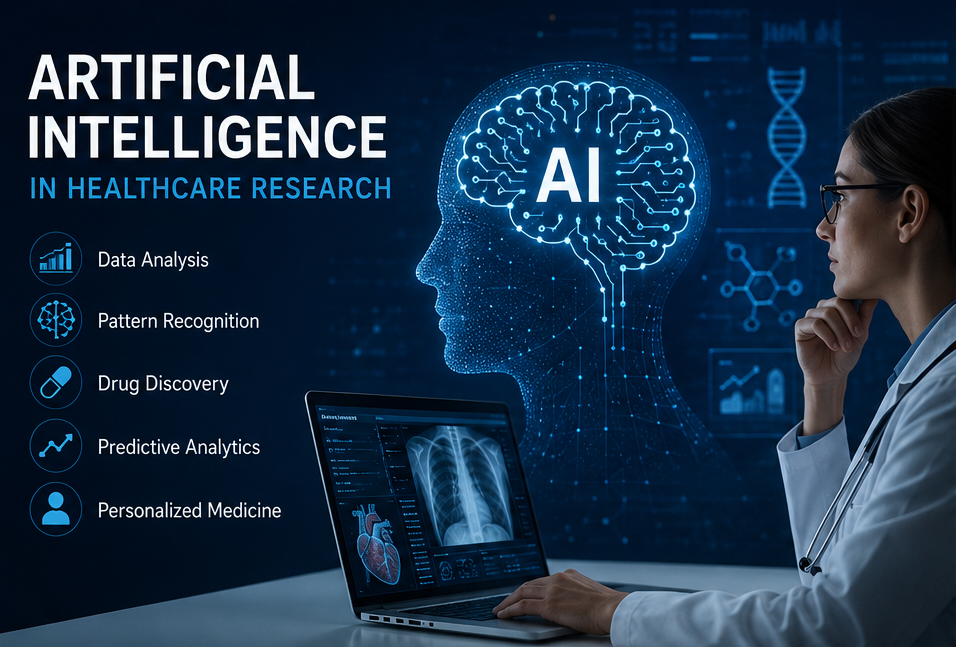
Artificial Intelligence (AI) is changing the healthcare industry by improving diagnosis, treatment, and medical research. It helps healthcare professionals analyze large amounts of medical data quickly and accurately. From disease prediction to robotic surgeries, AI plays an important role in modern healthcare systems.
What is Artificial Intelligence in Healthcare Research?
Artificial Intelligence in healthcare research refers to the use of intelligent systems and machine learning technologies to support medical diagnosis, treatment planning, and healthcare management. AI helps researchers identify patterns in medical data and make better decisions for patient care.
Importance of AI in Healthcare
Healthcare systems generate huge amounts of patient information every day. AI helps process this data efficiently and supports faster diagnosis, personalized treatment, and improved healthcare outcomes. It also reduces human error and increases research accuracy.
Key Advantages
Applications of AI in Healthcare Research
Artificial Intelligence is widely used in medical diagnosis, drug discovery, personalized medicine, and robotic-assisted surgeries. AI-powered systems can analyze medical images, predict diseases, and support doctors in making accurate treatment decisions.
Common Applications
AI technologies are helping healthcare professionals deliver more efficient and accurate medical services.
Benefits of Artificial Intelligence in Healthcare
Artificial Intelligence improves healthcare quality by increasing accuracy, saving time, and reducing costs. It helps doctors provide better patient care through early diagnosis and customized treatment plans. AI also supports researchers in developing innovative medical solutions.
Major Benefits
Challenges of AI in Healthcare Research
Despite its advantages, AI faces challenges such as data privacy concerns, high implementation costs, and ethical issues. Healthcare organizations must ensure patient data security and fair use of AI technologies.
Common Challenges
Future of AI in Healthcare
The future of Artificial Intelligence in healthcare looks promising with advancements in wearable devices, virtual health assistants, and predictive healthcare systems. AI is expected to improve healthcare accessibility and efficiency in the coming years.AI-driven innovations are likely to transform patient care and support medical professionals in making better healthcare decisions.
Conclusion
Artificial Intelligence in healthcare research is transforming modern medicine by improving diagnosis, treatment, and research quality. Although challenges remain, AI continues to create new opportunities for better healthcare and medical innovation.





Its very intresting i want more information