

Introduction
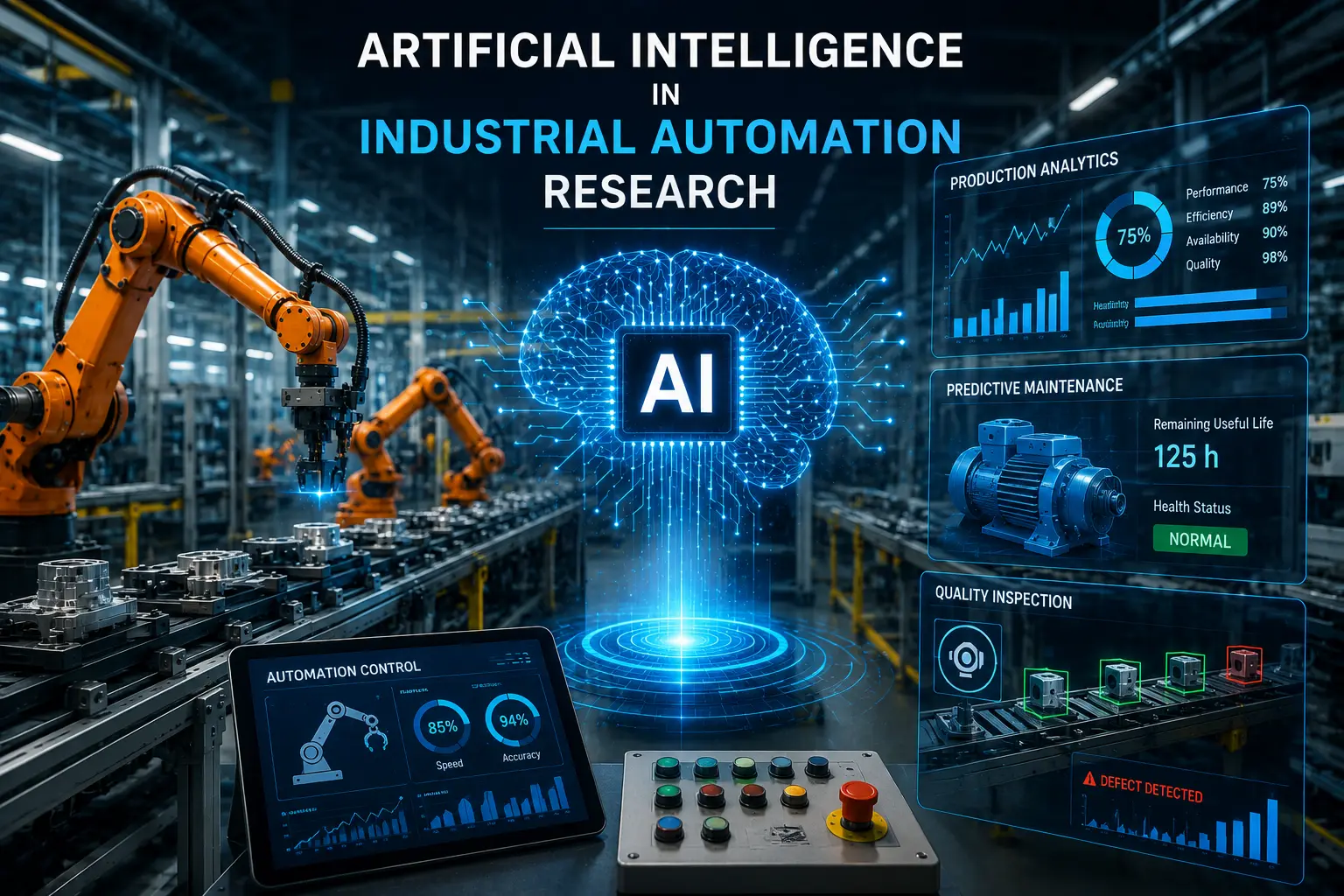
Artificial Intelligence (AI) has revolutionized the field of industrial automation with advancements that boost manufacturing efficiency, productivity, and decision-making processes. AI enables industrial automation through efficient and improved manufacturing processes, better control of production and machines, as well as enhanced decision-making mechanisms. With the help of AI technology, factories are now becoming smarter while robots are making operations more productive and efficient.
Step 1: The Concept of Artificial Intelligence in Industrial Automation Research
As it pertains to industrial automation research, Artificial Intelligence refers to intelligent systems that utilize machine learning and automation technologies for optimized manufacturing and operational processes.
- Helps with industrial automation
- Boosts machine efficiency
- Helps with better decision-making
- Eliminates the need for manual labor
Manufacturing plants can have AI-based robots that carry out manufacturing activities independently.
Step 2: Application of Artificial Intelligence in Industrial Automation
AI technology helps in analyzing and automating the processes and operations in an industry, thus ensuring high efficiency and productivity.
- Automates manufacturing
- Increases operational efficiency
- Analyzes machine performance
- Enables predictive maintenance
Factories make use of AI technology to analyze machine performance and predict equipment failure before a break-down occurs.
Step 3: Application of Artificial Intelligence in Industrial Automation Research
Artificial Intelligence (AI) is extensively applied in various industrial sectors to boost manufacturing and operations.
- Smart manufacturing technologies
- Industrial robots
- Predictive maintenance
- Quality assurance systems
- Automation of supply chains
AI-based quality assurance systems can detect flaws automatically in the process of manufacturing.
Step 4: Technologies Applied in Industrial AI Research
Industrial automation utilizes various technological advancements to increase the efficiency of production
- Machine learning algorithms
- Robotics
- IoT sensors
- Computer vision systems
- Big data analysis
Machine learning algorithms help to collect machine operation data and optimize the process of production
Step 5: Advantages of AI in Industrial Automation Research
Artificial Intelligence improves industrial performance with regard to increased speed and efficiency of production.
- Higher productivity
- Lower production costs
- Enhanced quality of goods produced
- Improved pace of production
- Reduced human errors
Automated AI systems allow factories to manufacture goods faster without any mistakes.
Step 6: Disadvantages of AI in Industrial Automation Research
Regardless of the benefits provided, there are some problems associated with the application of AI in industries.
- High implementation costs
- Technical complexities
- Privacy and security issues
- Skilled specialists required
Small businesses may struggle with applying AI in their industries because of high implementation costs.
Step 7: Future of AI in Industrial Automation Research
The future development of Artificial Intelligence in industrial automation is promising, thanks to smart manufacturing advancements.
- Smart factories
- Autonomous industrial robots
- AI-driven manufacturing processes
- Real-time monitoring
In the future, industries will rely on the concept of a smart factory based on Artificial Intelligence.
Conclusion
Artificial Intelligence used in industrial automation research allows for improving manufacturing with the help of various intelligent technological advancements. AI helps to boost productivity, reduce costs, and improve efficiency of production processes. Although some problems exist, AI is continuously providing innovative ideas in industrial research.