

Introduction
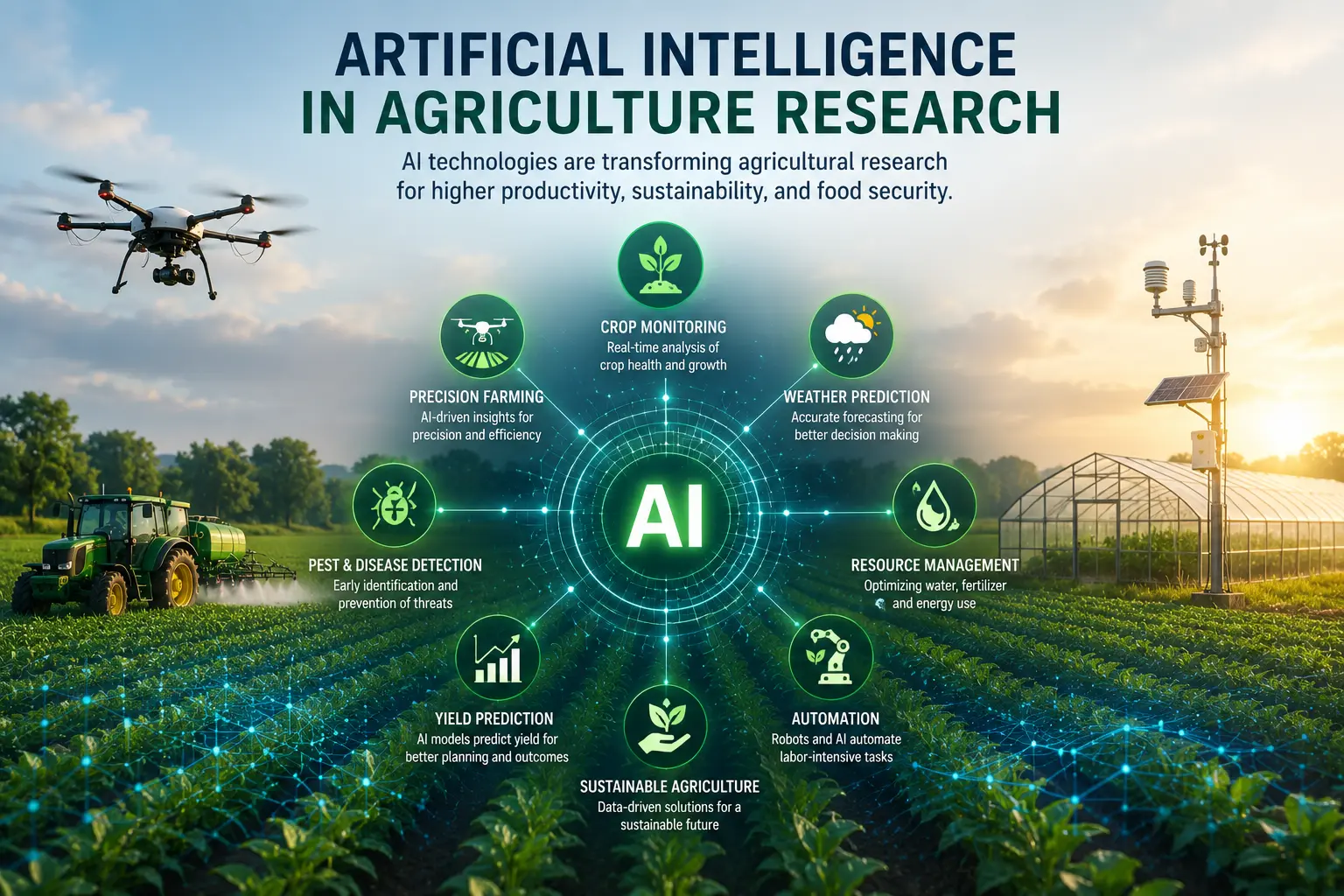
AI has revolutionized agriculture by enhancing efficiency, monitoring, and managing resources in farms. It enables researchers and farmers to analyze data, predict the condition of their crops, and become more productive. Through smart irrigation, crop disease detection, and other innovations, AI is contributing significantly to agriculture research.
Step 1: Defining Artificial Intelligence in Agriculture Research
It involves the application of intelligent, automation, and machine learning techniques in agriculture research and improvement of agricultural practices.
- Smart farming
- Crop monitoring
- Decision making
- Efficiency in farming
AI tools are used by farmers to monitor their soil and crops’ health.
Step 2: Role of AI in Agriculture Research
AI is used by researchers and farmers to analyze data related to farming quickly and efficiently. It ensures effective crop management, weather predictions, and efficiency in agriculture.
- Farming data analysis
- Weather predictions
- Cropping production
- Agriculture automation
AI enables farmers to predict the amount of rainfall and plant crops at appropriate times.
Step 3: AI Applications in Agriculture Research
AI finds applications in various fields of agricultural research and in farming.
- Smart irrigation system
- Disease detection in crops
- Precision farming
- Automated harvesting
- Agricultural drones
AI-operated drones are utilized to detect plant diseases and monitor their development.
Step 4: Technologies Utilized in Agricultural AI Research
Advanced technologies are utilized in agricultural AI systems.
- Machine learning algorithms
- Remote sensing
- Agricultural sensors
- Drone technologies
- Big data analytics
Intelligent sensors help farmers gather the information about soil moisture content.
Step 5: Advantages of AI in Agricultural Research
AI can be used in agriculture to increase productivity and foster sustainability.
- Improved crop productivity
- Cost savings
- Effective resource management
- Timely disease detection
- Efficient farming
AI systems can help save water resources by monitoring irrigation practices.
Step 6: Challenges in Using AI in Agriculture Research
However, despite the benefits, AI usage in agriculture research is still faced by certain challenges.
- High cost of technology
- Technical know-how deficiency
- Data collection problems
- Internet connection difficulties
- Equipment repair challenges
Small farmers may find it hard to use expensive AI tools in their operations.
Step 7: AI in Agriculture Research in the Future
The future of Artificial Intelligence in agriculture looks bright with improvements in smart farming techniques.
- Smart farming automation
- Improved weather prediction
- AI crop monitoring system
- Precision agriculture tools
- Sustainable agriculture solutions
Future farms may use driver-less tractors with AI technology.
Conclusion
Artificial intelligence in agriculture research is revolutionizing farming through advanced technology, automation, and smart decisions. It allows farmers to optimize crop production and resource utilization. Despite some difficulties, Artificial Intelligence in agriculture is creating new opportunities in agriculture.