

Introduction
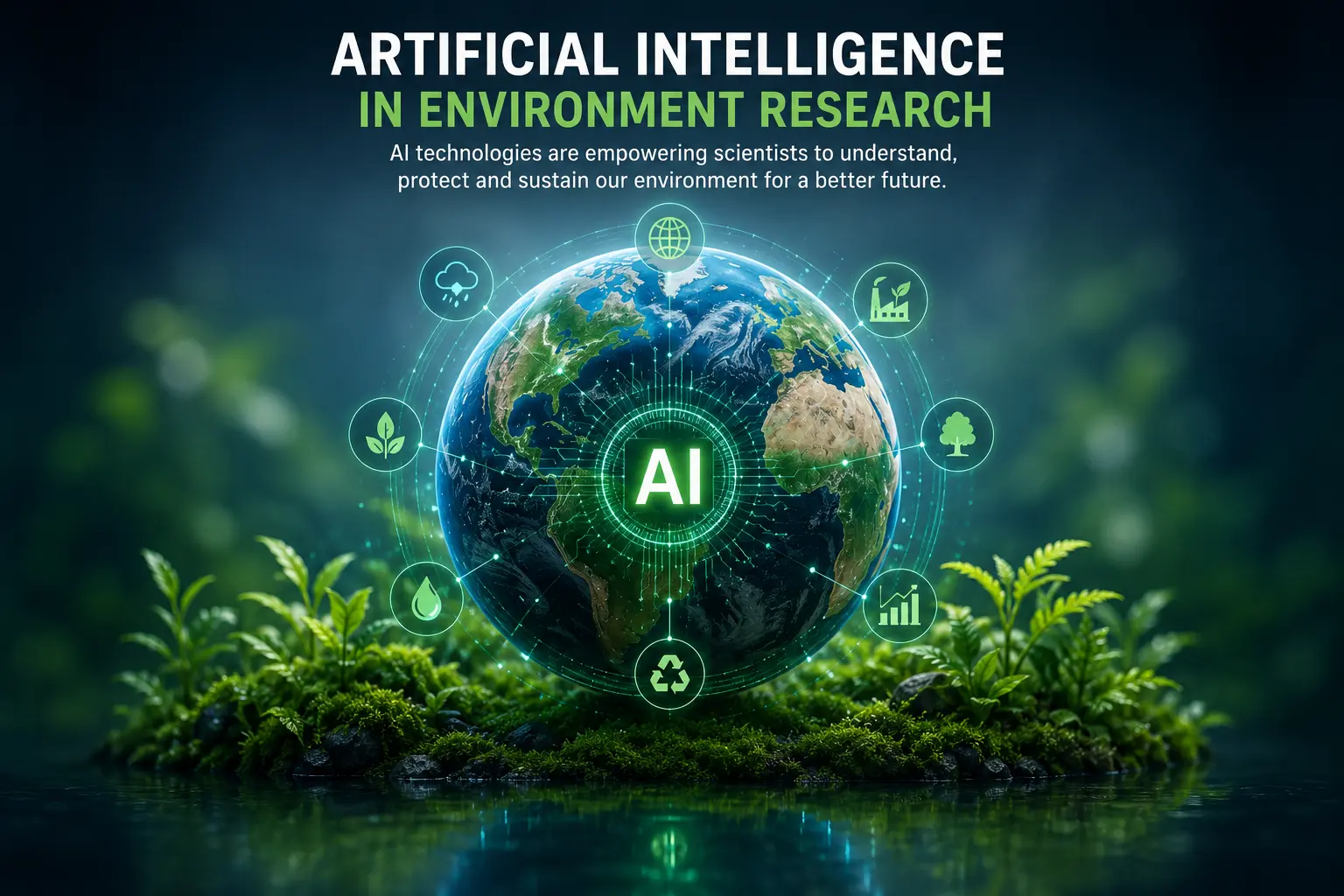
AI is significantly contributing to environment research by aiding researchers in analyzing environment data, predicting climate change, and offering sustainable approaches. Technologies in AI aid in accurate analysis of environmental data and help with making better decisions concerning environmental protection.
Step 1: Meaning of AI in Environment Research
Use of artificial intelligence in the environment can be defined as the application of machine learning, intelligent systems, and data analytics technologies in environmental research and sustainability.
- Assists in environmental monitoring
- Provides improved climate analysis
- Predicts environmental changes
- Aids in decision-making
Scientists utilize intelligent systems in the analysis of forest conditions and the potential of wildfires.
Step 2: AI Role in Environment Research
It plays an essential role in analyzing environmental data to enhance knowledge of environmental changes and tackle ecological challenges.
- Analyze climate data
- Monitor environmental changes
- Track pollution
- Manage resources
AI applications assist scientists in predicting rainfall and temperatures for climate studies.
Step 3: Applications of Artificial Intelligence in Environmental Studies
The use of AI in various environmental domains helps achieve sustainability and conservation goals.
- Climate change prediction
- Pollution monitoring
- Wildlife conservation
- Forest management
- Agriculture intelligence
AI-driven drones monitor forest and wildlife population.
Step 4: Technologies Involved in AI in Environmental Studies
Environment AI uses different forms of technologies for gathering environmental data.
- Machine learning technology
- Remote sensing technology
- Satellite imaging technology
- Big data analytics
- IoT environmental sensors
Using satellite imagery, researchers gather information about levels of air pollution in cities.
Step 5: Advantages of AI in Environmental Studies
Artificial intelligence provides environmentalists with tools to enhance environmental protection activities.
- Quick environmental analysis
- Accurate predictions
- Efficient resources management
- Environmental risk reduction
- Environmental risk reduction
Through AI models, farmers improve water management and reduce environmental waste.
Step 6: Disadvantages of AI in Environmental Studies
In addition to its benefits, the application of AI has some disadvantages for environmental studies.
- Implementation costs
- Lack of environmental data
- Technological complexities
- Poor data accuracy
- Limitations of infrastructure
Some environmental regions may not have enough sensor data to make AI predictions.
Step 7: Future of Artificial Intelligence in Environmental Research
The future of Artificial Intelligence in environmental research seems very bright due to constant advancements in technology.
- Smart climate prediction systems
- Advanced pollution monitoring
- Solutions for sustainable agriculture
- Conservation through artificial intelligence
- Disaster management
In future, there may be many smart cities which use Artificial Intelligence technology to monitor pollution and sustain the environment.
Conclusion
Artificial Intelligence in environmental research has become instrumental in understanding and conserving the environment. Through artificial intelligence, it is possible to predict climate, monitor pollution, conserve wildlife, and manage natural resources in a sustainable manner. Despite challenges, the technology keeps offering innovative ways of addressing environmental issues.